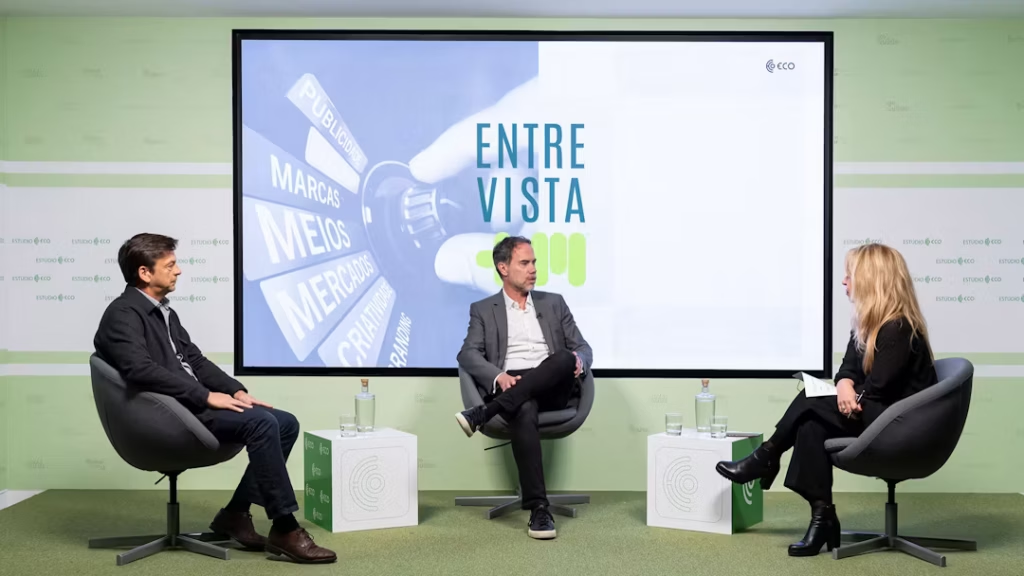
Filipe Teotónio Pereira and Ricardo Pereira, from Nova Expressão and comOn, now have a common shareholder. The impact of the deal on the agencies, but above all the opportunities and challenges of the market, under analysis.
“When we become complacent and think that brands exist because agencies exist, everything is wrong. We need the industry to grow. And for the industry to grow, I cannot be fighting for my competitor’s budget. I have to grow the market.” The idea is defended by Ricardo Pereira, founder and CEO of comOn, an agency whose majority capital was acquired at the beginning of the year by Nova Expressão SGPS, owner of the media agency with the same name.
“What our industry does is change behaviours, which then lead to business. We have to be concerned with business and put brands at the service of business, not at the service of short-term P&L,” reinforces the head of the creative consultancy, which underwent restructuring over the past year. At the moment there are 32 people; a year ago there were 11 more.
“We had a lot of work volume that did not do much for us, because it was more systematised work and not only did it not give us much margin, it also did not give us much reputation or learning. And having volume for the sake of volume, honestly, does not make much sense,” explains Ricardo Pereira. The deal with Nova Expressão is described as almost an “inevitability”. “Thinking that we can do everything alone is a utopia,” he says.
“The two agencies have as a common denominator the fact that they are national, Portuguese, entrepreneurial and place great value on every euro invested, because they were also created by Portuguese entrepreneurs, independent and with a very strong concern for measuring the impact generated,” Ricardo Pereira points out.
This characteristic is also defended by Filipe Teotónio Pereira, General Director of Nova Expressão. “There is this variable of entrepreneurship, which makes the difference. Independence gives us impartiality and the freedom to, among other things, always choose the best partner for the project in question,” he points out.
In an interview with +M, the leaders of the creative consultancy and the media agency explain the impact the deal will have on both agencies and point to the market challenges and opportunities.
Why sell a majority stake in comOn, and why to Nova Expressão?
Ricardo Pereira (RP): The reason is almost inevitable. If we look at the market, at what clients increasingly need and at the range of tools and scopes we have to have, thinking that we can do everything alone is a utopia.
And, beyond being a utopia, it is a thankless struggle that generates no value for us, nor for the market, much less for our clients. It is a very complex struggle and, honestly, it does not make that much sense to face it alone.
What we have been doing for some years now is associating ourselves with people and companies with whom we have a strong common denominator and are able to have, above all, trust as the glue between us all.
That is why comOn, for around six years now, has been increasingly active in AMIN (Advertising & Marketing Independent Network), of which I was co-president until the end of 2024. Why? Because it allows us, within AMIN, which is the global association of independent agencies, to have other entities from which we can learn, share tools, complement scopes, share knowledge, and also create dynamics for sharing resources and energy. In doing so, we bring more value to our clients and to our market, with a much smaller scale than that of the large networks, while still being able to fight the same battles.
What we have been doing for almost 10 years with Nova Expressão is the same, within a scope that was initially very much rooted in media. Nova Expressão has always been our great partner, with not only excellent expertise, but also a very strong vision in the media area. The two agencies also have as a common denominator the fact that they are national, Portuguese, entrepreneurial and place great value on every euro invested, because they were also created by Portuguese entrepreneurs, independent and with a very strong concern for measuring the impact generated.
Combining the first part of the answer with this second one, it made complete sense for us to move forward with this move. And with another added value, which is that we need to focus. The fact that Nova Expressão has experience — and here I highlight Pedro [Baltazar] and Rita’s [Rita] experience in management and management control — and very strong long-term vision tools, without being hostage only to the year’s P&L, but looking at the market with a strong capacity to invest in what the market needs in anticipation, seems excellent to us. Bringing this reality into comOn, and allowing the current management team to focus much more on vision and the market, means that, with the same people, we can generate much more availability for the market. That alone is already a gain and a quick win.
In practice, with the change in shareholder structure, what changes at the agency?
RP: Much more pragmatism and more automation in management control. From an operational point of view, almost nothing else changes; the teams remain completely autonomous and independent in their operation. What we have here is the possibility of adding, through the synergies we have and because investing together makes it much easier and more competitive, even in terms of diluting costs, access to tools, studies, knowledge and, obviously, some synergies that allow us to create a joint approach for one or another specific client.
comOn was restructured and resized over the past year. How many people left, and how many are there today?
RP: We are currently 32. Over the past year and a half, we had to start this process, somewhat as a way of walking the talk on sustainability. And sustainability is also from a governance and social perspective, which is why we resized the agency in line with the scope and volume of work we want to have. We had a lot of work volume that did not do much for us, because it was more systematised work and not only did it not give us much margin, it also did not give us much reputation or learning. And having volume for the sake of volume, honestly, does not make much sense.
We had a lot of work volume that did not do much for us. And having volume for the sake of volume, honestly, does not make much sense.
Ricardo Pereira
How many people left?
At the moment we are 32, in January last year we were 43. It seems to us to be an appropriate size, which will obviously now tend to grow, but grow in a very sustainable way, indexed to the scope and volume we have with our clients.
And for Nova Expressão? They are different companies, different teams, but what changes? What is the added value?
Filipe Teotónio Pereira (FTP): It is another illustrious brand in Nova Expressão SGPS’s media ecosystem, which already includes Power Media, Local Planet [a network of independent agencies] and Nova Expressão itself, the media agency. As it is a complementary activity, there are obviously synergies here, from a commercial point of view first of all, but also in terms of studies, more talent entering this ecosystem, and it does in fact give us greater muscle to invest in artificial intelligence, to which we are paying very close attention. Another extremely important area is indeed the international dimension: comOn with AMIN and Nova Expressão with Local Planet, which in the context of acceleration we are living through is, in fact, extremely important.
Pedro Baltazar, when talking about the acquisition, said there were several reasons for doing it, but that the most important would be development in terms of artificial intelligence and a greater import of technology into Nova Expressão. Is AI the great challenge of the year? What will it impact in your activity?
RP: I would say that social intelligence has already been a challenge for some years. The vision we have of artificial intelligence is that of the augmented human; it comes to increase our capabilities and give them much greater depth and speed. We use AI daily, massively I would say, in almost all capabilities, to increase and improve what we do. It starts in a data and research dynamic, where we have a much stronger support base to defend our thinking and what we present, very much in strategy, but also in creativity.
But has that not almost always been the case?
RP: Yes. Now it is happening in a more widespread, automated and scalable way, through generative AI, which gives us more democratised access to automated data processing, access to information and the whole prompt component. It then allowed us to disseminate this to other capabilities, whether in design, video, content creation or media planning. It obviously allows us to have this more widely spread across all areas, in what we do. Above all, we have always had a very digital label; digital is increasingly a mindset and is diluted.
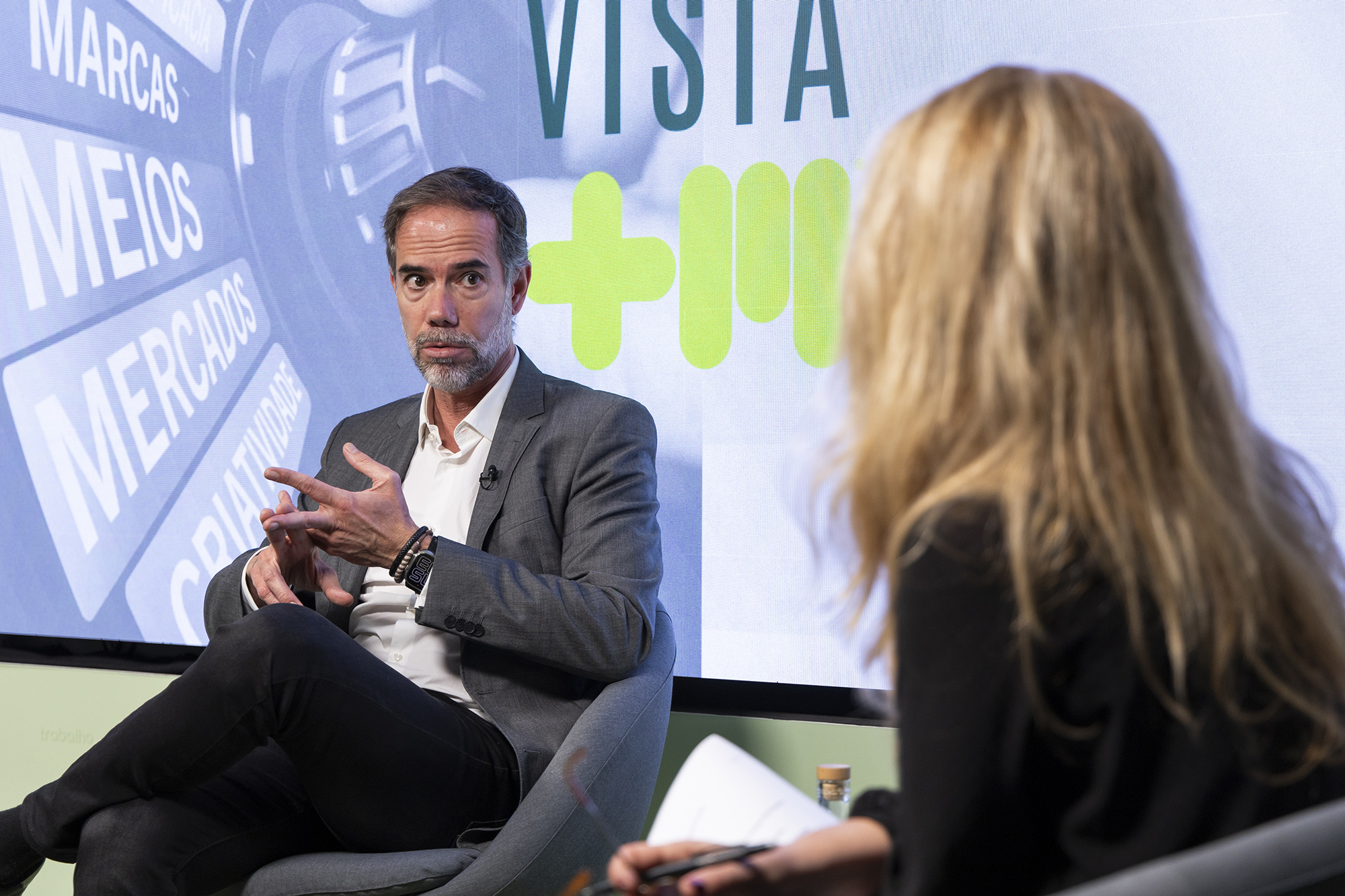
You presented yourselves as a digital agency, also with a media component. Now you position yourselves as a creative consultancy.
And that is exactly it, because we very much defend thinking before execution. Now, we do not step away from execution, and thinking begins with strategy and creativity. And what feeds all of this, beyond creativity, is data. And then we want to make it tangible and close the cycle. But going back, the issue is very much about how we are able to iterate and the part of digital that is most alive is the part of agility and testing, testing as we go, optimising as we go. And this can be done not only on the internet and mobile, but increasingly in outdoor, events and activations. And we can and should do that. AI allows us to accelerate all of this.
Are you already able to do this in outdoor and activations?
If we have the mindset, we can always do it. Now, we have more or fewer tools that allow us, depending on the investment and the context, to do it in a more or less automated way. And that is one of the advantages of being together with Nova Expressão, and it is also one of the reasons why we are with AMIN and with Local Planet: together, we have access to tools that perhaps we would not have individually.
Personally, I do not really believe in proprietary tools, because they tend to become obsolete, they tend to become silos and they tend to make clients hostage to agencies.
Ricardo Pereira
Multinationals have proprietary tools.
We are able to have a mix. Personally, I do not really believe in proprietary tools, because they tend to become obsolete, they tend to become silos and they tend to make clients hostage to agencies. We do not want that. We want clients to be autonomous and not to be left hostage to us, nor orphaned by us. We want them to want to work with us, and to see us as a partner that helps them have the best ecosystem and the best tools to grow with them, and to see us as the best people to help them define that ecosystem and grow alongside them. Together, what we can do is not only adopt market tools, but personalise them to the context and needs of each client, while keeping clients in control of their data and of the value they extract from it. Both AMIN and Local Planet give us much greater access to that.
Qual é este ano o grande desafio para as agências de meios? O que está a mudar à boleia da tecnologia?
FTP: Artificial intelligence offers a world of opportunities, starting with the internal workings of the agencies themselves and the processes that can be affected at that level, and extending to the execution of campaigns, where we have been using artificial intelligence and technology for several years now; by adding these layers, we achieve optimisations. It is an ongoing process that will accelerate as we incorporate more artificial intelligence.
From the perspective of the challenges facing media agencies, I believe the key is for them to remain relevant to brands and advertisers. The equation brands face in reaching their target audience is becoming increasingly complex, not only because audiences are more fragmented, but also because the consumer journey is growing ever more complex, with more touchpoints, and it is essential to be able to map this out, respond effectively and process the data generated by this process. And, in fact, agencies have been able to keep pace with this evolution and continue to integrate technology.
As long as we respond to this data and information and continue to optimise it, turning it into insights to help us make better decisions, we will remain relevant.
Is your relevance being called into question?
FTP: There is always that risk, but as long as we respond to it and continue to optimise this data and information, turning it into insights to help us make better decisions, we remain relevant.
What additional challenges does being a local agency, despite being part of an international network of independent agencies, present in this increasingly complex and technology-driven world? And, on the other hand, what added value might this bring?
I believe there is enormous added value in being close to the consumer. The know-how regarding the media and the local consumer, whilst always maintaining the global perspective that the network provides us with.
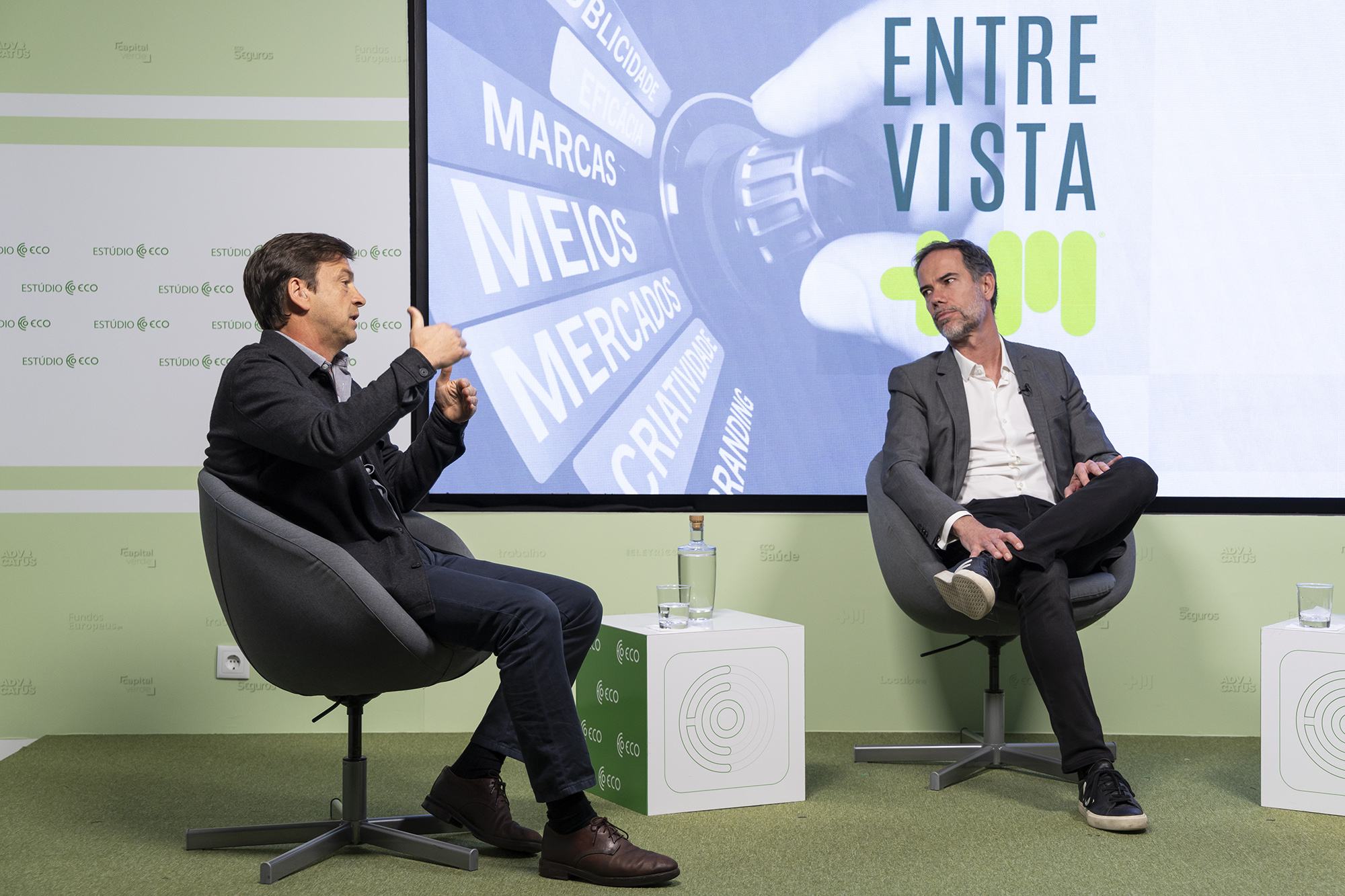
Multinational companies also have teams here, large ones, at that, and they, too, have an understanding of the local consumer. On top of that, they bring all the knowledge, experience and best practice from abroad.
That’s true. But in fact, there’s this aspect of entrepreneurship that makes all the difference. Independence gives us the flexibility and freedom to, amongst other things, always choose the best partner for the project in question. We aren’t restricted to tool A or B; in short, we always opt for what’s best. And then, of course, there’s this agility that allows us to adapt quickly to whatever is required.
RP: I think the last two questions sum up very well why we’ve adopted this more formalised relationship. Whether we’re losing relevance, or whether we’re at risk of losing relevance, and how we differentiate ourselves from international [agencies], given that they also have local structures and local insights. I’d already mentioned this, and Filipe reiterated the importance of entrepreneurship. The fact that our founding CEOs and senior managers are just a coffee’s distance away, right next door, gives us agility in decision-making, in aligning visions, and in investment, in a dynamic that not only maximises the value of every euro invested, but also adapts it to the context of our economy, our culture, our sense of humour, our legacy, and all our regulatory and compliance requirements. We’ve always lived here, we’re here, we know this and feel it first-hand every day. comOn and Nova Expresão have always had this; there aren’t many who can say the same. Returning to the first question….
There is this aspect of entrepreneurship that makes all the difference. Independence gives us the flexibility and freedom to, amongst other things, always choose the best partner for the project in question. We are not constrained by tool A or B; in short, we always opt for what is best.
Filipe Teotónio Pereira
Relevance.
I like to ask myself that question every day, and I’d like our teams to ask it regularly too, because that is precisely why we exist. When we become complacent and think that brands exist simply because agencies exist, we’ve got it all wrong. We need the industry to grow. And for the industry to grow, I can’t be fighting over my competitors’ budgets. I have to expand the market. And that’s how our industry will grow.
And is it feasible?
We need to manage to do this in a coordinated way, because as long as we’re tearing each other apart and thinking that the only way we’ll succeed is by winning Agency X’s account, the market won’t grow, and if the market…
But what happens is that each agency tries to win the account away from Agency X, increasingly working as a team, leveraging synergies, in order to deliver more services.
That’s true, and it’s a vicious circle. More synergies, to be able to do the same at a lower cost, and that cost is reflected in the price, so you can do the same at a lower cost. That’s wrong, because then we have to have more tools, as you’ve just mentioned; we have to constantly invest in training our teams and our customers, and we have to be much more experimental, such as with A/B testing. This takes time and energy, which must also be monetisable.
What our industry does is change behaviour, which in turn leads to business rather than to awards, as was often the case in the past. We need to focus on business and put brands at the service of business, not at the service of the short-term P&L
Ricardo Pereira
Really? Can they make money from it?
No, not always. There is a need here to win over the market. But rather than just winning over the market, aligning it, and realising that we all stand to grow if this is done properly, and building its credibility, we need to expand the customer base.
And expanding the base involves several aspects. Firstly, we need to attract more talent who want to join this industry out of a sense of aspiration — not to be the genius who takes to the stage and dazzles everyone with a particular campaign (we’re past that stage now) — but because of the impact they’ll have on changing behaviour. What our industry does is change behaviour, which then leads to business rather than awards, as was often the case in the past. We need to focus on business and put brands at the service of business, not at the service of short-term profit and loss. We must also balance that short-term, performance-driven profit and loss with a longer-term brand vision.
Isn’t building a brand what it’s all about in the long run?
It’s not just that. It’s about building a brand and the impact that brand has on the business. People often confuse the brand with the business. They are different things – they are completely interrelated, but they are distinct dimensions – and we cannot ignore the impact that brands should have on business, whether in the immediate term, the short term or the long term. And this is where, if we genuinely prioritise this – and empower our teams – moving beyond mere competence to adopt a mindset that looks beyond their specific deliverables to see the impact those deliverables generate, I believe that is when we will truly be able to expand and grow our industry. Whether in terms of scale, by investing in marketing, or in terms of attracting talent who want to come and work in this industry because they genuinely feel they can help change the world here. I would say that the two major industries that change behaviour are education and marketing.