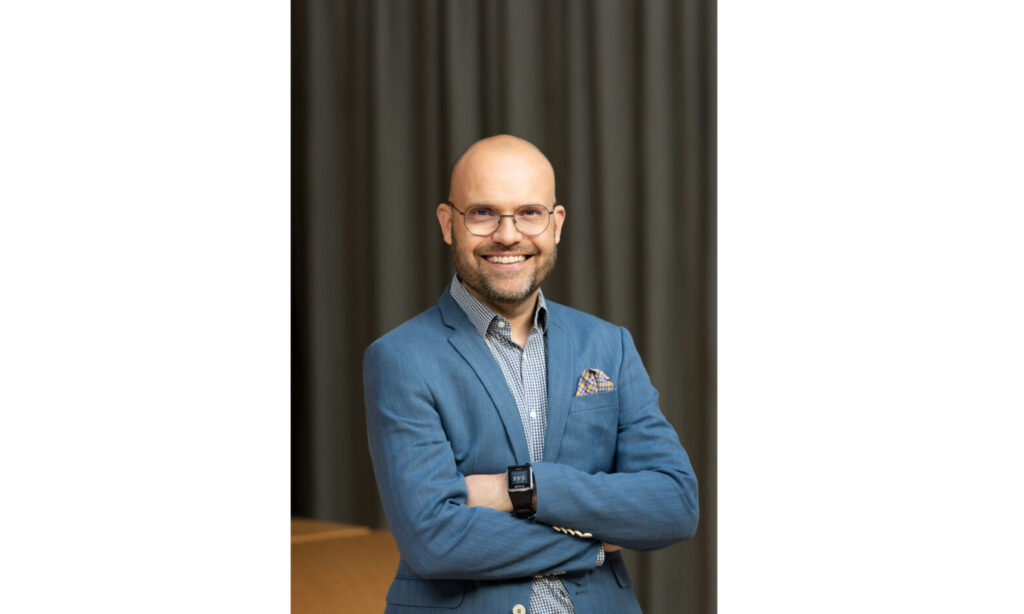
Ismo Nikkola (pictured), Senior Vice President of Global Marketing and Brand Management at Finnish company Valio, shares key consumer trends and highlights the mistakes marketers and advertisers should avoid.
Founded in 1905, Valio is a Finnish dairy and plant-based food company with a presence in 50 countries. The company is investing in plant-based products and cellular protein to attract new consumers.
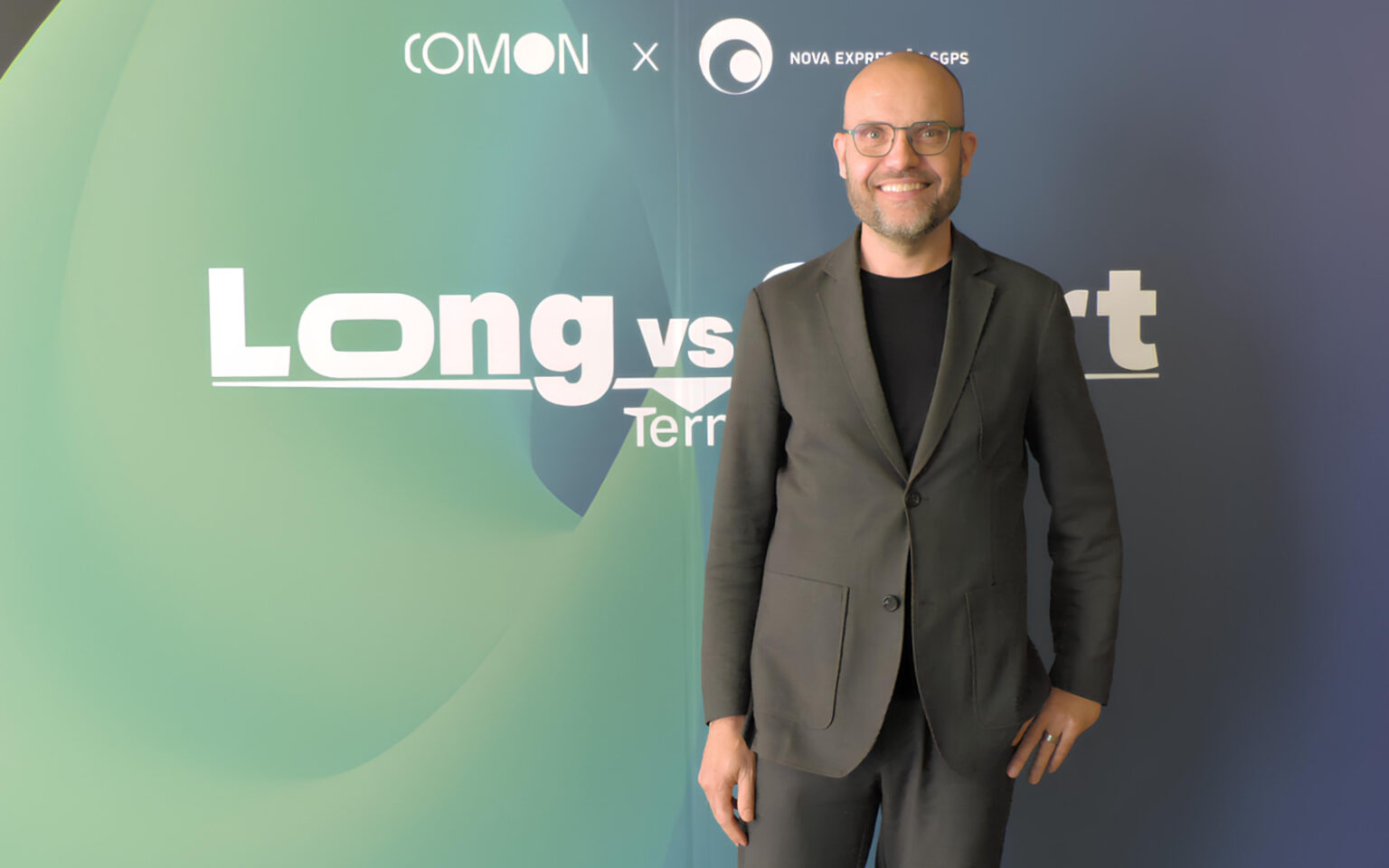
In an interview with M&P, Ismo Nikkola, Senior Vice President of Global Marketing and Brand Management at Valio, who was in Lisbon to speak at the Long vs Short Term event organised by Comon in partnership with Nova Expressão, explains the strategy the company is implementing and shares what Portuguese brands should do to boost sales and expand internationally.
What is the biggest challenge in brand communication today?
I’m not sure it’s the biggest challenge, but one of the hardest things is finding the right channels and the right moments to communicate with consumers.
There are so many channels and so many ways to reach consumers, with so many choices available, that brands need to quickly understand what works and what doesn’t if they want to capture the attention of potential buyers.
The world is changing very quickly. New communication channels are emerging every day, so it’s essential to understand which channel best serves a brand’s communication objectives at any given moment.
As a strategist, do you believe more in brand building or performance marketing as the best way to drive sales?
I favour brand building. Performance marketing is much easier to execute when you have a strong brand or, at the very least, a clear definition of the brand’s objectives, a deep understanding of the target audience, and a well-defined strategy.
In those situations, performance marketing, like any other form of marketing, is much easier to integrate into a communications plan. The priority is to define the strategy and identify the target audiences.
During your presentation, you said that Valio has stopped investing in traditional media. What’s the reason behind that?
We haven’t stopped investing altogether. We’ll continue to allocate part of our budget to traditional media because I believe television advertising is still the best way to evoke emotion and tell stories.
At the same time, we’re increasingly focused on the moments that matter most to people—times when they’re more receptive to brand communications. That’s why we aim to be part of those moments through the sports, cultural and food events we sponsor.
It’s not enough to simply deliver messages; brands need to be present in consumers’ lives. As our brands are well known and well loved, we want to get closer to consumers so we can better understand them and what they truly value.
Is the goal to become a natural part of consumers’ everyday lives?
Yes, that’s exactly the strategy. It’s also a way for us to get closer to Generation Z and Generation Alpha. One example is our partnership with one of Finland’s leading rap festivals.
When we announced the sponsorship, many people were surprised by it. But for us, it’s important to be there with people during the moments that matter most to them. It’s essential for our brands to be a natural part of their lives.
Following that sponsorship, the children of our consumers started asking us to get involved with other music events. These small signals show that we’re becoming part of the moments that matter most to our consumers. That kind of presence is one of the most effective ways to build a brand.

Do you have any data linking the decision to sponsor the rap festival to an increase in sales?
Not in terms of sales. Sales aren’t always the best metric because they don’t necessarily increase immediately. Instead, we track brand perception and brand attributes every month, and we consistently see those metrics improve around these events. We also use these occasions to distribute products and observe consumers’ reactions firsthand.
The relationship with agencies
During your presentation, you also spoke about the relationship between brands and their creative and media agencies, highlighting a number of pitfalls. What are the biggest mistakes to avoid?
The biggest mistake is to leave strategy development to the agencies. Defining the strategy is, first and foremost, the company’s responsibility. Once that is in place, the company should guide the agency’s work.
The biggest mistake a company can make is relying too heavily on its agency and delegating the development of its strategy. While strategy can certainly be developed in collaboration with an agency, the marketing strategy must ultimately be defined by the marketers, because the responsibility lies with them.
How does Valio balance the heritage of its century-old brands with the need to innovate and remain relevant in an increasingly competitive global market?
Innovation has always been part of our brands’ DNA. We’re known for the innovative products we’ve introduced over the years, from lactose-free products to probiotics such as Lactobacillus rhamnosus GG, to name just two examples.
When developing the brand strategy we’re implementing, we looked both to the past and to the future, seeking to bring the two together. To build a brand’s future, you first need to understand its past.
How do you communicate Valio’s different brands and products without compromising their individual identities?
That’s something we’re very mindful of. The Valio logo always appears alongside the product brand on our packaging. While there are some shared visual elements, each brand has its own design and distinct identity.
In our marketing and advertising, we always feature the parent company’s logo. We want the corporate brand to add value to our products, just as product innovation strengthens and adds value to the brand itself.
Which consumer trends are shaping Valio’s strategic decisions?
Convenience is one of the key trends. In our case, price is a more difficult area because private-label brands dominate the market. The growing demand for plant-based products is another trend we’re watching closely, and we’re working to expand our offering in that category.
Snackification, and the growing demand for snack-sized consumption, is another trend on the rise. Across Europe, as in many other parts of the world, snack consumption is increasing as more people eat on the go or away from home.
In Finland, supermarkets are placing dedicated displays near the checkout to save shoppers from having to walk through the entire store to buy these products. People don’t want to waste time. Since drinkable snacks are one of the fastest-growing trends, many of these displays are refrigerated.
Recipes Drive Thousands of Visitors to the Website
Do you invest in influencer marketing to build your brands?
Influencer marketing plays a huge role. In Finland, food influencers are so influential that last summer we partnered with two of the country’s best-known creators to help us develop two new products.
At launch, they were actively involved in promoting the products, and their images appeared on the packaging. The campaign was a huge success. Our analysis of influencer marketing consistently shows that these collaborations make a significant contribution to the business.
Have you been investing in your own digital platforms to get closer to consumers?
Our website and mobile app are key pillars of our communications strategy. As we did this year, we’ll continue to invest more in both in 2026. Rather than seeing them as just a website or an app, we’re building them into media platforms that allow us to reach more consumers.
Our website already features more than 5,000 recipes, along with podcasts, articles and other inspiring content. More than 100,000 people visit it every day, making it one of our most important communication channels.
Is the goal to strengthen your presence in consumers’ everyday lives?
Yes. It’s another way for us to get closer to consumers, just like our collaborations with influencers and our event sponsorships. Through our website, we’re part of people’s everyday lives while they’re cooking.
Since the 1950s, we’ve been creating recipes in the test kitchen we built at our factory and sharing them through our own media, which at the time were still in print. In the 1990s, we began digitising that content. Today, we have thousands of recipes available online.
Do you invest in video content to promote your recipes?
Some of them are already available in video format. Not all of them yet, but a large proportion can now be followed that way. We’re also exploring artificial intelligence (AI) to personalise recipes according to our consumers’ tastes and needs.
People who don’t eat meat can visit our website and, using AI, instantly access versions of our recipes where meat is replaced with alternative ingredients. We’re exploring many other applications for these technologies as well. It’s been a very exciting journey and one that has helped us build an even closer relationship with our consumers.
The (Ir)Relevance of Origin
Which emerging initiatives or areas do you believe hold the greatest promise for most brands in the near future?
AI will be the driving force behind the biggest changes we’ll see in marketing over the coming years, particularly when it comes to execution. Collaboration with other brands and companies will also be increasingly important.
At Valio, we’re collaborating with a number of startups in the field of cellular agriculture to produce protein in bioreactors. It’s a highly promising innovation. Food is our core business, which is why we’re investing in these kinds of partnerships.
These companies are using our raw materials and production side streams, which also creates additional value for our brand. It’s not something that will become mainstream in the short term, but we’re investing with a long-term horizon in mind.
Alongside dairy, plant-based and animal-based foods, cell-based foods will become part of the market. These global developments present significant challenges for companies and marketers alike.
What are the communication challenges of preserving Valio’s Finnish identity across the nearly 50 countries where it operates?
As most of our international markets are B2B, we have dedicated teams that explain the origin of our products. In our B2C business, however, we don’t always emphasise it. We do, for example, in China, where country of origin is an important purchase driver. In Sweden, on the other hand, we deliberately place less emphasis on our Finnish origin because of the long-standing rivalry between the two countries.
In our domestic market, that positioning is important. In other markets, it becomes less relevant. In Sweden, for example, our dairy communications focus more on the fact that our products are lactose-free. We are the market leader in lactose-free products in Sweden.
Which Portuguese brands are you familiar with, and what do you think they need in order to gain greater prominence in the global market?
To be honest, I’m not familiar with many, apart from Fidelidade. There are many brands whose country of origin I simply don’t know. I’m aware that some Portuguese brands already have a presence in many international markets. To gain greater prominence globally, they need to recognise that the consumer is the key. They also need to understand who they are as a brand and define a clear brand strategy.
The key is to be bold enough to do both: understand what your brand can bring to consumers in different markets, and what those markets can bring to your brand. International expansion is challenging and needs to be approached one country at a time. A brand shouldn’t enter too many markets at once. It should build its business market by market. That’s one of the key lessons we’ve learned from our own international expansion.
If a Portuguese brand wanted to expand into Finland, are there any additional considerations it should keep in mind?
Yes, there are many things it should be aware of. A food brand, for example, needs to understand that our food culture is very different from Portugal’s. We have a substantial breakfast early in the morning, lunch at around 11 a.m., and dinner as early as 5 p.m.
It also needs to understand that Finns place a high value on authenticity. If you enter the market with a product that is genuinely Portuguese, Finnish consumers will appreciate it and be keen to discover it.
“Consumers Don’t Want to Pay More for Sustainability”
What is Valio doing to achieve its goal of reaching net zero by 2035?
We’re investing on several fronts. The biggest challenge lies in primary production. Since cows produce methane through belching and manure, we need to find ways to manage those emissions. One of the solutions we’re pursuing is the production of biogas.
We’re also investing heavily in soil health and the types of grass we select and cultivate, focusing on varieties that absorb more carbon dioxide. We’ve been conducting extensive scientific research in partnership with universities to better understand this process. More than 80% of our carbon emissions come from the primary production stage of our dairy operations.
Are consumers supportive of the environmental efforts you’re making?
Year after year, we’ve been ranked as either the most or the second most sustainable brand in Finland. The challenge is that we’ve found consumers aren’t willing to pay for it. They want us to be sustainable and they ask what we’re doing in that area, but they’re not prepared to pay a premium for it.
Even so, although we don’t make a big public issue of it, we’re looking for better ways to communicate the innovations we’ve introduced to make our packaging more environmentally friendly, as well as our broader sustainability efforts. I believe that’s essential.
If the market expects you to be sustainable, why don’t you communicate those efforts more actively?
Because it can come across as inauthentic. People don’t believe it. It often ends up sounding like a list of factual claims, and when those messages are presented in a more promotional way, they risk being perceived as greenwashing.
This kind of message is more effective when communicated through editorial coverage or as part of a broader communications strategy. As I mentioned, some of our packaging already includes information about the sustainability initiatives we’re undertaking.
How can environmental commitments and sustainability efforts be communicated without coming across as greenwashing or sounding overly technical?
That’s a good question, but I don’t think I have an answer that’s 100% satisfactory yet. We’ve been communicating these efforts through scientific publications and academic collaborations, but we haven’t directed that communication at consumers to any great extent because it’s extremely difficult.
Consumers’ perception of our sustainability efforts is reflected more in the information we provide on our packaging. Carbon emissions, on the other hand, tend to be much harder for most consumers to understand.