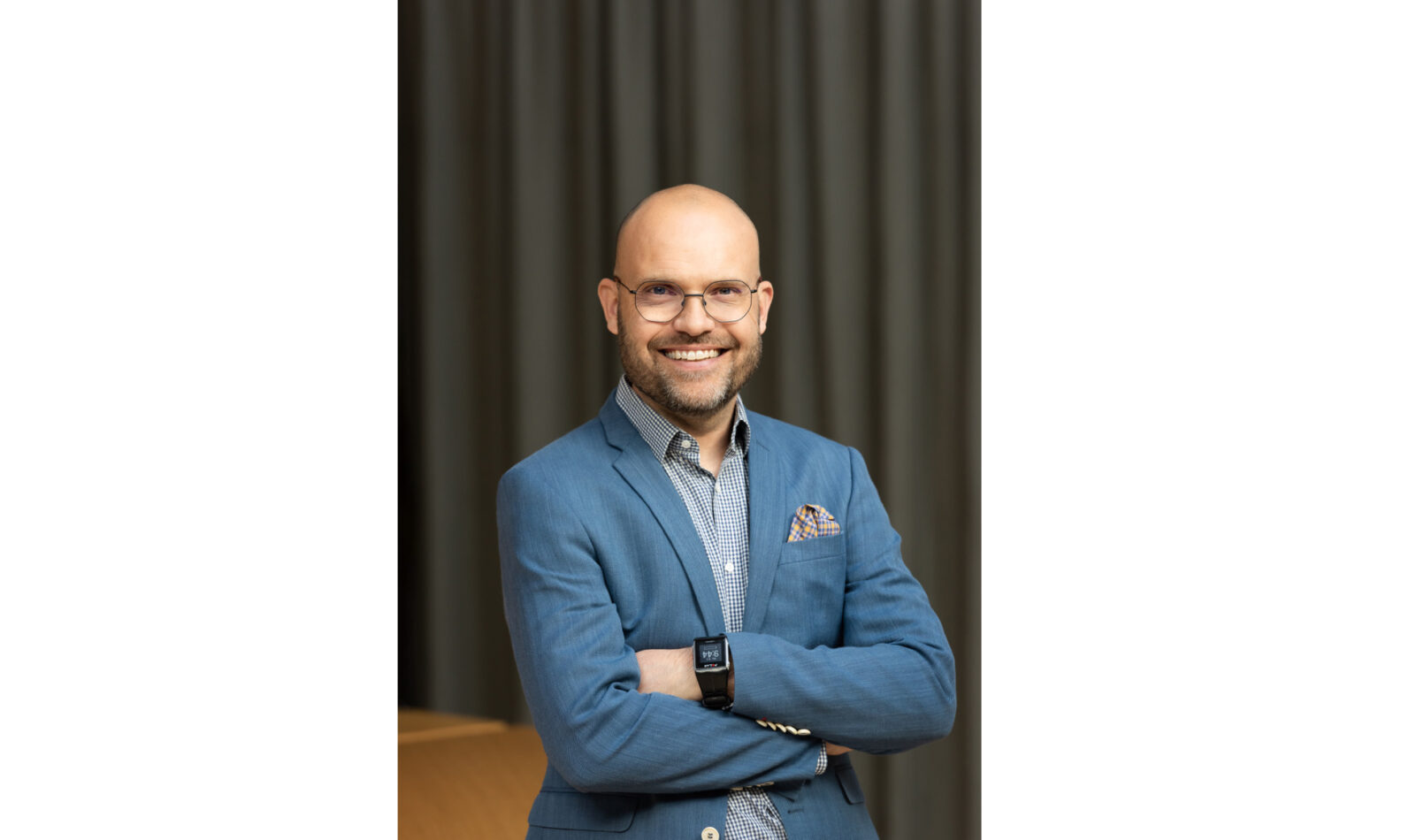
In an interview with M&P, on the occasion of the acquisition of Comon, Pedro Baltazar (pictured) reveals that the development of digital tools for media and internationalisation are the focus. TIN and RTP, as well as emerging media formats such as podcasts and streaming, are among the other topics discussed.
Nova Expressão SGPS starts the new year with the acquisition of a 52% stake in Comon, a creative consultancy agency that works in marketing with a focus on digital. In an exclusive interview with M&P, Pedro Baltazar — chairman of the board of directors of Nova Expressão SGPS, sole director of Nova Expressão S.A. and now president of Comon — reveals the objectives behind the acquisition and takes stock of the company’s internationalisation and internal reorganisation of digital platforms for media.
He outlines the scenarios for the evolution of the media and agencies, in which “Omnicom’s business with IPG signals that the large multinational model either is bigger or cannot achieve the previous levels of profitability.”
Throughout the conversation, he reveals that Nova Expressão’s turnover grows in 2024 to €33 million, that the functional drinks brand Sunlover, which he owns, “is an investment that will never be profitable”, but that he does not get upset about it, that he is a workaholic — “in the good sense” — and does not think about retiring because he is still “extremely useful”. Despite making “some mistakes” in terms of the SGPS, with “more doubtful investments”, such as Inapa.
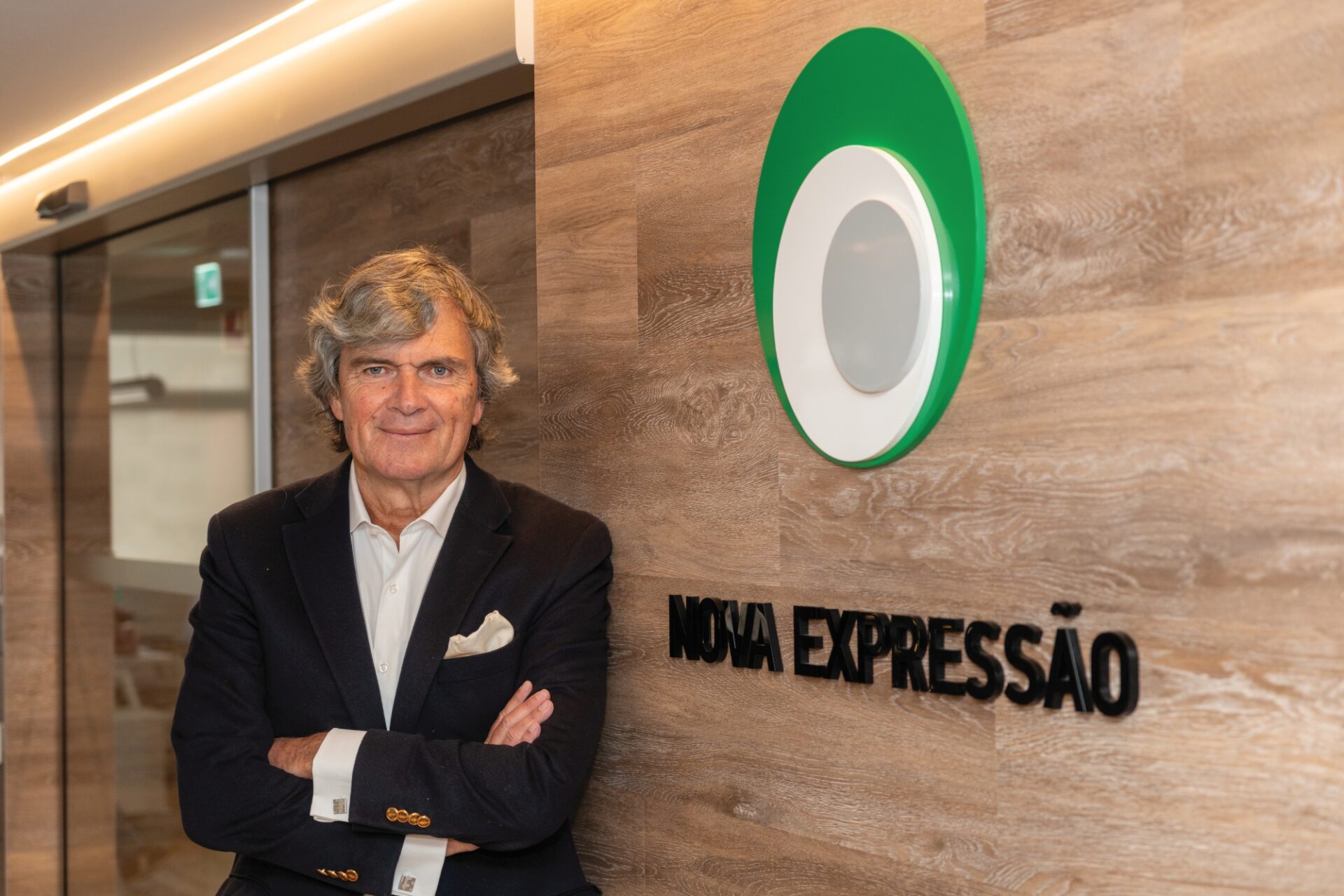
Pedro Baltazar wants Nova Expressão and Comon, “with the teams completely separate”, to bring together some research and AI development tools.
What do you highlight in the activities of Nova Expressão’s media holding in 2024?
Especially at Nova Expressão Agência de Meios S.A., we work a lot by development cycles, in which we try to avoid very extreme movements. This was a second year of a cycle that begins post-Covid, with a first year of reorganisation, according to the needs, ours and those of the clients, and what our competition was doing, in which we strengthened international connections.
The second year of this cycle ended in December and was extremely important. We made a major investment in internal systems and platforms, which allow us much faster profitability, efficiency and time to market. Almost all our platforms are new, adapted on a Marktest basis or with Marktest programmes, which I consider to be an element that grew in this market and that was essential for media agencies to develop.
The first point was to consolidate international relations, in which we are shareholders of Local Planet and have a company that then works with the clients that come from Local Planet International, which is Local Planet Portugal.
What does Local Planet do?
Based in London, it goes to European pitches and also in North America and South America, with little participation in Asia, which is perhaps the major handicap.
We follow the pitches of multinational brands, which may not be present or may not have large investments in countries such as Portugal. If they do, Portugal is included.
How much does the business brought in from abroad represent?
In turnover, it represents more than 30% and has been increasing.
What other international connections do you have?
We have Mediaplus, which is a completely different model; it is a company based in Germany. It is a more digital media agency, based on the German and Austrian market, with shareholdings in companies in Europe, and it carries out pitches focused on Europe. We work, for example, on BMW Digital, C&A and De’Longhi, which came from those pitches.
At Local Planet, things are less formal and more Iberian, and may not be European, which allowed us our first major internationalisation. Portugal is a very ungrateful country for national companies in almost all sectors, especially for media and advertising agencies.
Why?
We have Portuguese companies of some size that, when choosing media agencies, instead of having their own marketing departments do it, go to procurement. In other words, the same people who buy pens or other utensils needed for their basic activities are the ones who carry out this process, looking at the size and volumes of the company.
Procurement has no notion and thinks that media is an intermediary, when today we work on many more characteristics and functions that our clients had difficulty executing in-house and that have moved to media agencies.
Such as?
Everything that has to do with data, which is now going to hit artificial intelligence (AI), and even the very nomenclature of the media, which used to be easier: there was FTA, outdoor, radio and press. Now, we have much more, namely with digital platforms and the follow-up of the digital part of media groups.
Growth in 2024
How did Nova Expressão’s business evolve in 2024?
We grew, we ended the year with a turnover of €33 million and last year we had around €29/€30 million. More than this difference in value, it is important to be able to grow within the reorganisation of internal platforms and the development of the teams, which have the tools and the mindset that make us grow.
What contributes most to the increase in business?
I had as an internal objective that if we stayed the same it would be great, because we were in this reorganisation, which takes up the time of people who are fundamental to the company. We have a focused new business culture, which has to do with my characteristics, but we also have clients of many years, who are satisfied. Therefore, every year, it is as if they were new.
There is another very important aspect, which is the satisfaction of our staff. Nova Expressão does one fundamental thing that Portuguese business owners forget: companies have to be profitable, and that profit also has to be well distributed through the satisfaction of human resources.
By reaching a balance within this formula and a good internal environment, these things can be done. Today, we are 40 people, but tomorrow we may be 39 or 41. If we found people with the characteristics that adapt to what Nova Expressão is, we could even be 45 or 50 people.
You start the year by buying 52% of Comon. What are the characteristics of this company that made you move forward with the acquisition?
The Nova Expressão SGPS holding made the acquisition through a capital increase of around €500 thousand. We have always had good relations with Comon, with which we have a buying cluster on the international Meta and Google platforms, but not media planning. It is a question of volume and access to current affairs.
Comon is in the technological field. It once had it more developed; today it needs resources to do it. It has the whole area of digital creativity, networks, and they are great specialists in the development of digital products. With the purchase, Nova Expressão SGPS takes the presidency and Ricardo Pereira, founder and initial shareholder, continues as CEO.
We will try to give some management efficiency and ensure that the teams of each of them, completely separate, can, for example, in the area of research and development of AI systems, try to bring together some of those tools.
Does Comon already have a media side, with the purchase of space that it did together with you?
They only bought digital platforms. If they have one client or another, they also bought it through here, but these are occasional things. But the focus was the buying of international platforms, as well as the display of Portuguese groups.
Is it a strategic investment or an acquisition to articulate Comon with the activities of the other companies in the Nova Expressão group?
The articulation is perfectly autonomous. I am very enthusiastic about this process in terms of Comon, firstly because I like the CEO and the people; this is fundamental to me. I am certain that wherever there is a point of contact we will find, with absolute certainty, a client or project in common.
In areas that Nova Expressão worked less?
No media agency works, or may have worked occasionally, on what Comon has as expertise and works on, even in traditional media agencies that move into digital. Only now are they beginning to appear and, even in the large groups here, that kind of proposal was perfectly autonomous.
What is Comon’s turnover?
Comon’s turnover in 2024 was €3 million, but bear in mind that we are not talking about media, but about services and projects, which are different things.
Are there other areas you are looking at for acquisitions in 2025?
All my experiences outside media, with other types of companies, have not left me satisfied. In other words, the company’s business proposal may seem good, but the people are very complicated. Portugal and Covid do not help within this, because people are very centralised on their own place and not on the development of companies.
From the outset, there is a handicap on our part when we analyse in terms of the market, because people’s mentality is going to be a problem. But, for example, we have success in the partnership with Powermedia, where we have 33%, Dentsu has 33% and Havas, at a certain moment, bought 33% but never made purchases with Powermedia. They are only a silent partner, much to our regret, because if Havas bought half of its volume with Powermedia, we would be the largest buying centre in Portugal.
Industry needs scale
Is the consolidation of the industry, such as Omnicom’s deal with IPG, a trend that will continue?
Omnicom’s deal with IPG signals that the large multinational model either is bigger or cannot achieve the previous levels of profitability. Because the groups began to incorporate into their offer certain services that clients have forced them to have and that require major investments, such as the data side and the development of the consumer journey.
What happens is that, in order to win large clients, agencies incorporate requests that clients want and create their own structures to respond, the fees do not reflect this and the agencies then are not profitable.
Why?
There is a need for scale. The procurement department of a company in Portugal that is among the 200 largest thinks that the volume of an agency is fundamental. If the agency is outside a certain volume, within the top three, it does not want to know and imposes those three.
Then, in Portugal, agencies do not have the courage to say that the client does not interest them, because it does not have the characteristics nor does it adapt.
At Nova Expressão, we are perfectly autonomous; if we accept the client, we have to fulfil what we agreed with them, but there are clients that I do not have the slightest interest in having.
Which are those clients that you have no interest in having?
The major problem comes from marketing departments being conservative and not wanting evolution. They want their comfort and pass the ball to the media agency, which already has the fee. We have had that type of client, which I see as a learning experience.
The clients with whom I have no margin are part of a learning process. I can do this because I do not have a shareholder, nor a chairman of the board of directors saying that, if we lose money, it is to “run” with the client.
The balance is unbalanced in large companies and will lead to more mergers and acquisitions; no one is going to stand still. The market outside the large technology companies, Google and Meta, etc., is not talking only about media but also about data and AI.
Within the Portuguese and Iberian context, where we have great relations and exchanges of clients, Nova Expressão has a great opportunity with these mergers of companies, because from country to country there are certain products and brands that cannot all be worked on in the same group, as they are competitors in terms of market. This will create great opportunities.
There are already agencies from the same group working with competing brands.
There are clients who do not allow it because the Chinese wall is a good farce; anyone can see the system on the other side, they are all the same. I believe that this does not happen in large countries, where there is some control, but sometimes it does happen.
In the last three or four years, we have been in pitches for brands that belonged to Procter & Gamble, Unilever and Reckitt, which had to leave the groups, due to competition issues, and go to funds, which are also obliged not to work with multinationals from the big five.
You foresee more consolidation. Are you available to buy or to sell?
We do not have that scale, nor are there any independent national agencies with that scale. I prefer to work on an Iberian basis, and Comon could be a good spearhead. There are major opportunities in Spain, and we will see how Comon develops. I always trust that things will appear at exactly the right moment.
Have you ever received offers to buy Nova Expressão?
I have, a few years ago, but they wanted to come for the ‘cash?. We have always followed a strategy whereby the money goes either to Nova Expressão SGPS or remains in the S.A. There is rarely any kind of withdrawal, precisely in order to strengthen the company, because we have had two or three moments when we lost our largest client. It is a dramatic problem because it was the best client in terms of volume, then it disappears and also stops paying, leaving behind a large invoice.
Which client was that?
We had Maxitel, Banif and, in terms of internationalisation, Toys “R” Us. It is a risk, but they were also excellent clients, some more than others. These are moments, and companies in Portugal have a certain tendency to lose sight of costs and not have a strategic plan. Everyone grows, but they cannot start confusing what is the market, and a certain amount of luck, with vanity, because luck changes.
Market grows 3%
What is your estimate for the growth of the national advertising market in 2024?
The money managed by media agencies is growing by 3%, but it is a difficult calculation to make because we never know how much money in Portugal is invested in the large buying centres of the platforms that groups, and also the multinationals themselves, have, even to maintain some control over their investments. We also do not know how much is invested through direct buying on the major digital platforms. There is a lot of advertising that is not accounted for here.
Is 3% growth low?
Spain and the European countries grew much more. We had good growth, also because we had the Olympic Games and the European Football Championship. There was development in media such as outdoor, and whenever a medium develops and communicates well, the market itself benefits from that return. I expected it to grow more; 3% is low.
Does that percentage refer to the growth in investment in buying media space, or to the growth in what brands spent with media agencies?
It refers only to the turnover of media agencies. I have real access to the pool of the combined buying centres, broken down by communication medium, which gives us more or less the growth figure. Then we have the 15% of direct investments. In addition to this, there are the clients of media agencies who buy the digital part directly on international platforms.
What was the reason for your departure from the Portuguese Association of Media Agencies, APAME, and for rejoining in 2024?
I was always chairman of the general assembly, even when Nova Expressão was not a member. I was the representative of Powermedia, which never left the association. There were three or four cases, involving the issue of procurement, for example with Santa Casa da Misericórdia, which should not be buying media directly, because it is almost financing the media. I am not saying that it does so; they are good professionals, like any others. What I am saying is that there may be some political involvement in the pressure placed on the media because the investment is direct. Direct investments tend to be questionable.
Are they questionable in your view?
Clients can do whatever they want with their own investment. The association has to have an opinion; it may not be mine, but it has to study the matter. And the association, like half of the associations in Portugal, tends merely to meet.
It did one very good thing — and I have to take my hat off to it — which is that the entire audience measurement control system is managed by the associations, and that is a Herculean task.
Why did you return?
I left before Covid and returned in 2024 because, as it was a moment of unity, I could not remain outside, and I even brought some agencies into APAME. It is important for us to have an association, but it needs to have a more interventionist mission. I still believe that an effort should be made, above personal relationships, for APAME and APEIP [Portuguese Association of Companies Managing Advertising Investments, created by Omnicom Media Group and GroupM] to become a single association.
Is that movement underway?
From what I have seen from the outside, things are better. I think that should be the first mission.
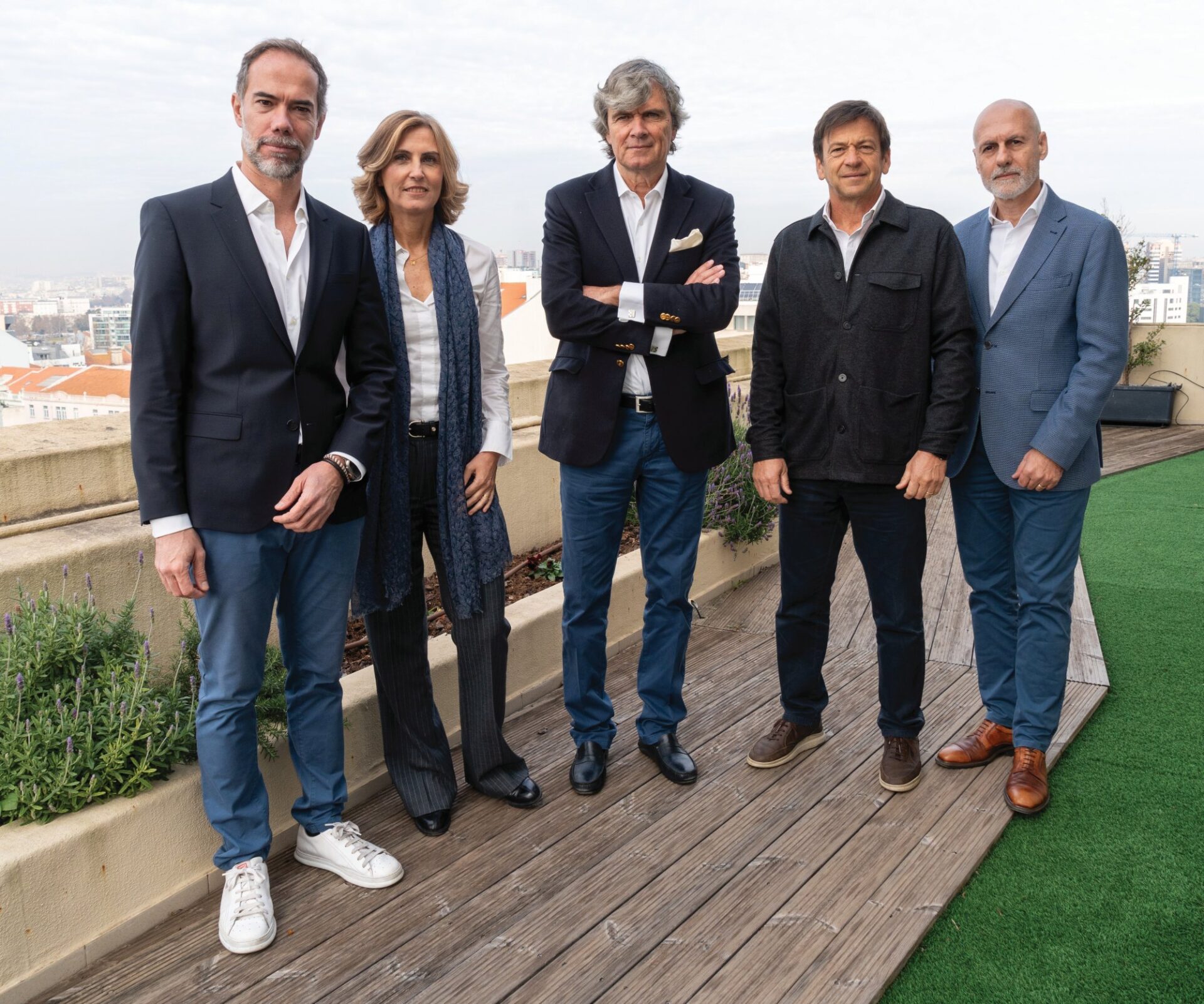
Pedro Baltazar (centre), with the members of the executive board of the Nova Expressão SGPS holding company, (from left to right), Ricardo Pereira, co-founder, partner and CEO of Comon; Isabel Ramires, managing director of Local Planet Portugal; Filipe Teotónio Pereira, managing director of Nova Expressão; and José Calado, executive director of Powermedia.
Weakening of the media
Agencies are consolidating, but the media business is more fragile, particularly the press. Why?
For many years, media groups with news operations — I am not saying all of them, because outdoor is different; it is simply a matter of buying concessions and does not require investment in information — did not have the objective of making money. They were not conceived as companies, but as vehicles of influence and as something necessary for the country’s development, as was the case with the organisation of state-owned media, such as RTP.
Even the private players were always born on the basis of “someone will put up the money, there will be a shareholder with an interest”, just as football clubs were a springboard to other things. From the moment you start to rationalise, the problems, cost structures and a certain mentality are there to be solved. What is at stake is that the company is not set up to be profitable, when the world today is profit-driven.
The three largest banks, including the state-owned bank, on the other hand, now have great difficulty providing financing. All this is to say that the larger media groups have to think very carefully about the investments and costs they have, and about the revenues they will generate. Medialivre has always been profitable and continues to be so with Cristiano Ronaldo, but it may not remain that way.
Does the insolvency of Trust in News, TiN, and the suspension of Diário de Notícias at weekends, for example, have an impact on brands, or is the press increasingly less relevant as a communication medium?
You have almost said it all. Brands have other ways of communicating, and the ways of reaching audiences are changing. Digital has been doing this for a long time. The pity is that we do not anticipate things, that we are not rational. Companies are profitable as long as they do two things: keep costs aligned with that year’s revenue and think about the future.
In the case of TiN, the owner, besides not having used everything he had, said that he thought he was buying something else. But he should have said that he lost sight of his responsibilities towards the people who work there, which is another point.
I hope I will not be punished for what I am about to say, but in reality I make an effort to be concerned about cost structures. I am not worried about small companies losing money within the SGPS, which has other ways of making money. But, overall, companies have to be minimally profitable.
The TiN case was more or less that. All the more so with someone who then had some difficulty — which I can understand — in capitalising at the right time because he had other objectives. At the necessary moment, he failed to fulfil his business responsibilities. Not now, because now he can say that he does not have the means. With a seemingly endless number of employees — in the best sense — he had to raise money from other partners, find solutions or close some titles at the right time.
And sell?
I do not want to get into someone else’s house or be ungrateful. They were our media supplier and we fulfilled our commitments until the end, with some caution from the buying centre, but he did not seem to have much reluctance about continuing like that, without finding another way. Now, of course, he will have to bear the responsibilities from that point of view, even if only reputationally.
Alarming trend in FTA
With audiences becoming increasingly fragmented across digital, outdoor and streaming, is there an advertising market for all television channels, including those that appeared in 2024, and taking into account growth of 3%?
We are seeing an alarming trend, which is that investment in FTA channels continues to carry significant weight. The share of cable channels, which increased this year, should already be higher. The system itself may be placing too much value on FTA, because there is a tendency for people to respond by doing what they have already done before, which is perfectly human.
Are free-to-air channels still the cheapest way to reach the largest number of people?
They are the most convenient way for certain companies, through media agencies, to reach their audience. If that audience is there, it is the cheapest way to do it. The price of FTA is much more cost-effective than that of other media. Display and cable are more expensive.
Is it possible that the audience is not on FTA?
Do political opinion polls not often show deviations? People do not say what they do, but we assume they do. But I am not questioning the technical efficiency of audience measurement. Audiences are measured with a people meter on the television, not through a survey.
They may be asleep with the television on. Anything is possible, and efficiency is not total. People cannot be everywhere, unless they have several devices on at the same time. But I am pragmatic: these are the audiences we have, that we work with and that we give to the client so they can make the final decision.
Are cable channels more the future than streaming platforms?
As long as streaming does not have hard advertising, other than branded content, for me it is not a medium. It has no audience measurement and I cannot place anything there, and there is excessive repetition in the number of contacts.
Playce, on the other hand, will last three or four years and is the big breakthrough, because it almost guarantees visibility. In adverts on regular television, people do not have the necessary attention, whereas on Playce it has been more than proven that they pay more attention. It is expensive in terms of GRP, but it is a fully targeted GRP.
“With a well-targeted and carefully selected product, cinema can strengthen both brand positioning and content strategy, as it allows brands to run longer-form films that would not typically air on television, where pricing is linked to the length of the advert.”
What impact do new formats like this have on media agencies?
“It is another challenge for media agencies, particularly for research teams, which will need to do more. We are likely to see further consolidation among larger companies as operating costs continue to rise. It is a challenge for media agencies, but clients also need to recognise that these capabilities come at a cost and must be properly valued.”
“Consulting firms have succeeded in convincing clients that their fees, however high, are justified. Media agencies have never been as successful at demonstrating the value of what they
Do media agencies now have stronger arguments than ever to justify their role, given the rapid rise of artificial intelligence, data and digital platforms?
It has to happen now. But companies also need to do their part. It’s not enough to say, “the market needs this, so pay us more.” There has to be a clear transformation roadmap, reinvesting traditional profits into CAPEX, AI and technology. For now, our AI is about turning client and industry data into research, and that research into more effective media plans. But that’s only the first step. The next stage is using AI to transform the way we communicate and make communication itself more efficient.
Content creators treated as media channels
At Nova Expressão, are digital content creators already treated as a media channel?
Some clients have dedicated teams handling that area, while for others we manage it ourselves. There are already several platforms that aggregate content creators, but not every client includes that type of investment within their media budget. Content creators are increasingly viewed as a media channel, yet the investment often still sits under communications budgets, alongside press relations and events, rather than within media.
It also has a lot to do with the credibility of the content creators themselves, whether they continue to evolve and stay relevant by covering current topics, much like media companies do. Anything is possible, as long as people understand that nothing lasts forever. We have to keep challenging ourselves every day, constantly asking whether we’re still doing things the right way or whether we need to improve.
Is audio the next big trend after influencers?
Podcasts, in most cases, are not essential. They will become a more common content format, but much of the discussion around them has been aspirational. From an investment perspective, they are not particularly efficient. That said, they can play a role in brand building and positioning, especially when they are associated with the right people.
The audience data we have for podcasts comes from the publishers themselves, so clients ultimately have to decide whether they trust those figures. Podcasts are not independently audited, nor is the market large enough to justify that at this stage. That is not necessarily a major issue, as the reported numbers are likely to be broadly accurate. As long as clients are comfortable with them, our role is less about validating the metrics and more about assessing whether the content is the right fit for their brand.
I don’t think people will have the time to listen to podcasts all the time. I can probably count on one hand the number I’ve actually finished. I might dip into one if the topic interests me, but I simply don’t have the time. It’s not my preferred format, and I don’t think it ever will be. Like most Portuguese people, I mainly consume audio in the car, where I’m usually listening to the news or music.
It’s another investment opportunity, much like Playce, although Playce benefits from having clearer, more measurable metrics, supported by its own reporting platform. Podcasts don’t yet have that level of scale or measurement, nor has the market fully matured in terms of content quality and talent. They are a useful complement to a media strategy, but I don’t see them becoming a major channel for delivering quick, consumption-driven returns.
Why are all the media groups investing in podcasts?
The content is already there, and podcasts allow media groups to sell inventory at a higher GRP cost. Raising the value of a GRP is the easiest way to generate additional revenue, rather than addressing internal efficiency. From their perspective, it makes sense—they already have the cost base, so they’re looking for new revenue streams. But they should also be tackling the underlying issues, whether that’s declining revenues or falling audiences, and taking action. When the owners of media groups lose interest in developing those businesses, or no longer have the resources to invest in them, that’s when a crisis emerges. We’ve seen that with TiN, just as we’ve seen it with others. Eventually, the message is simply that the money has run out.
Media groups have a broader purpose than simply making money and selling advertising. They also need to build balanced, sustainable businesses and make a genuine effort to remain financially healthy. As advertising investment becomes increasingly fragmented and shifts towards new media, the foundations of the traditional business model are already under significant pressure.
So why not consolidate? There are now countless cable TV channels, a large number of outdoor media operators and radio stations.
I’m not advocating indiscriminate consolidation, but rather a rational approach. The biggest challenge is integrating editorial teams that have traditionally operated independently, especially in news organisations.
TiN is already the result of that process, following the separation of Impresa’s magazine business. Should the media industry now return to consolidation?
In some cases, yes. But the industry also needs to make an effort to increase the value of the GRP. It may not be a popular thing for a media agency to say, but if a higher GRP comes with added quality, why not?
Is quality declining across the media industry?
The quality has actually improved, but so has the number of people working in newsrooms. The problem is that the market isn’t expanding. Unless those investments generate additional value or new sources of revenue, it’s very difficult to run a profitable operation. What happens then? In the first year, the owner is willing to absorb the losses. By the second, they’re starting to lose patience. By the third, they’ve had enough, so they walk away, come up with an excuse, stop paying social security contributions, and that’s the end of it. The reality is that Portugal’s justice system has historically made it too easy for people who don’t meet their obligations to get away with it—although, fortunately, those cases have become less common—and the legal process remains extremely slow.
Advertising on RTP1
How do you view the Government’s measures regarding RTP?
RTP is a classic example. We should always be cautious about government-led measures, because governments inevitably have interests that go beyond the public interest, even if their ultimate goal is to win votes. If you ask me whether it still makes sense, in the age of digital media, for the State to own a media group, I’d say it makes less sense today than it did when RTP was originally established. Of course, it still has employees and an audience, but it no longer has the reach or influence it once had.
What is your view on the removal of advertising from RTP1?
It’s very difficult for a state-run organisation to give up something that can be useful to it, particularly as a vehicle for government communication. That’s simply human nature. So they tend to choose the easiest option. To respond to pressure from other media groups, they take this approach, but ultimately it’s the consumer who pays the price. It’s the same with the new airport. Consumers always end up paying, whether directly or indirectly. In the end, the State almost always takes the path of least resistance.
What impact will the removal of advertising from RTP1 have on brands?
There may be some upward pressure on GRP prices, but that argument is somewhat misleading because advertisers have plenty of alternatives, including cable channels and out-of-home advertising. So it’s far from certain that other broadcasters will automatically benefit. There’s another point that rarely gets discussed: RTP1 only delivers full audience reach during prime time, and its advertising inventory isn’t fully utilised throughout the rest of the day.
I don’t think it’s as significant as some people make it out to be. It’s presented as a cure-all, but it may or may not deliver the expected results. Looking at the broadcaster’s cost structure could be just as important as a measure like this. Whether those costs are balanced or not is almost beside the point—the bill ultimately ends up with the taxpayer. From a media agency’s perspective, it’s not a critical issue. If advertising disappears from RTP1, there are plenty of alternatives. We can simply reallocate investment to competing broadcasters or to other channels, such as streaming, out-of-home, or wherever the target audience is.
How do you see the transformation of out-of-home advertising?
Digital out-of-home has enormous growth potential. Once the infrastructure is fully deployed, operators have the capacity to double, triple or even quadruple their revenues. The challenge, however, is that municipal concessions, which used to be relatively inexpensive, have become extremely costly. In the past, operators were mainly responsible for providing the street furniture. Today, they also face substantial fixed concession fees, electricity and maintenance costs, on top of the amounts bid in the concession tenders. Municipalities have been very effective at capitalising on that opportunity.
What do you see happening in the longer term?
We’re going to see significant change as consolidation continues, and many of the leaders currently running these organisations are approaching the end of their professional careers. As for me, I don’t see myself slowing down anytime soon. I need to stay active. Even when I’m doing something I really enjoy, like watching football, my mind is already thinking about something else. I’m a workaholic—in the best sense of the word. It’s not driven by ambition or greed, but by a commitment to building a sustainable business. I simply enjoy staying busy.
Succession at Nova Expressão
Will there come a time when stepping aside becomes inevitable?
I’m no longer the day-to-day leader of the business, although people still very much see me as its leader. I believe I’m still fully in command of my abilities—which is no small thing. I have a clear vision for the company, but my involvement in Nova Expressão today is around 20% to 30%, focused on the areas that matter most, such as relationships with media groups and senior-level relationships with key clients.
It’s just part of who I am. I genuinely enjoy being around people and interacting with them. I like helping people improve, for example, encouraging someone to quit smoking, but I also enjoy receiving advice. If someone can make a convincing case, I’m more than willing to change my mind.
Will any of your five children succeed you at Nova Expressão?
No. The succession plan lies within the executive board. One of my brothers is a member of that board, but he’s there on merit. Ricardo Pereira, through Comon, brings the digital side of the business together with our other companies, such as Making Science, Google’s largest partner, which handles all of our Google programmatic buying.
As long as I’m here, people respect me, and I’m still able to share some wisdom with our clients, we’re all happy to keep moving forward. I believe I’m still extremely useful, although I have made a few questionable investment decisions at the holding company level.
Like Inapa?
Yes. It was an experience that showed me Portugal—and state-owned holding companies in particular, are still not fully open to a market-driven economy. Too many people remain dependent on subsidies instead of focusing on building a competitive, market-led business.
Sunlover “is an investment that will never be profitable.” |