The fragmentation of audiences and the ‘explosion’ of new channels have forced media agencies to reinvent skills and methods. They have become strategic partners for brands, combining data, technology and creativity to respond to a changing market.
The media agency sector is undergoing one of the biggest transformations of the last two decades. Accelerated digitalization, the ‘explosion’ of new channels, the growth of e-commerce and ‘retail media’, the structural impact of streaming and ‘connected TV’, and the entry of artificial intelligence (AI) into planning, analysis and optimization processes have reconfigured the way brands and consumers relate to each other.
Today, audience fragmentation appears to have ceased to be a trend and become a permanent condition of the market, requiring a continuous reinvention of methodologies, skills and operating models.
In recent years, this shift has made the role of media agencies more demanding, not only as specialists in the efficient distribution of advertising investment, but as strategic partners in brands’ business. Specialists proclaim that the pressure for measurable results, whether in sales, awareness, investment efficiency or growth acceleration, has brought media, data, technology and creativity closer together in a way that had never before been necessary. The boundary between planning and consultancy has blurred; the boundary between media, content, performance and CRM has practically disappeared.
The emergence of generative AI and predictive models has accelerated this evolution. Today, processes that were once linear have become iterative and continuous: analysis is carried out in a constant loop, planning adapts in real time, optimisation happens by the minute, and advanced data processing enables decision-making at a level of granularity that would have been impossible just a few years ago. This is compounded by the gradual disappearance of third-party cookies, the need to build first-party data ecosystems, the proliferation of self-service platforms, and the growth of new investment environments—retail media, programmatic DOOH, the influencer economy, gaming, digital audio, and connected TV (CTV)—all of which demand new capabilities and new organisational structures.
Apesar da diversidade de contextos, parece existir um ponto de consenso: o papel das agências de meios nunca foi tão central. Os especialistas falam numa complexidade do mercado que exige uma visão integrada, capaz de unir dados, tecnologia, criatividade, conteúdo, estratégia e negócio. Exige equipas multidisciplinares, processos colaborativos e a capacidade de compreender tanto a jornada do consumidor como os desafios de crescimento das marcas. Exige, sobretudo, talento capaz de transformar informação em impacto.
It is against this backdrop that M&P spoke with the leaders of some of the leading media agencies operating in Portugal—both independent and multinational—to understand how they are reorganising their businesses, which capabilities are becoming more critical, the challenges shaping the market today, and how they are positioning themselves for a future defined by automation, artificial intelligence, and the redefinition of what media itself means. The result is an in-depth portrait of an industry that has transformed both internally and externally—and one that continues to evolve.
An increasingly demanding market.
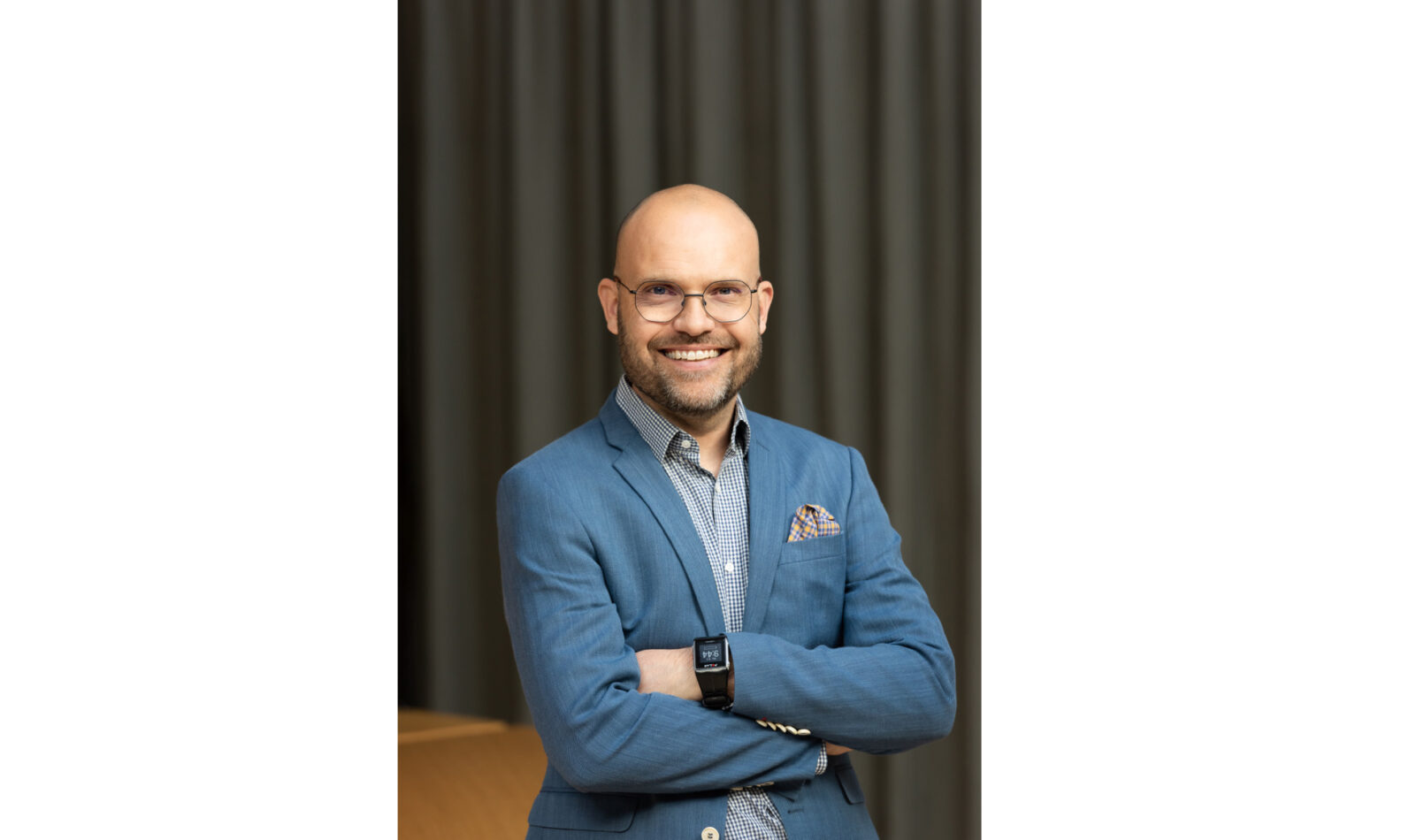
Filipe Teotónio Pereira, Managing Director of Nova Expressão, describes a landscape in which the role of media agencies has undergone a profound transformation, driven by an increasingly demanding market and advertisers seeking to maximise the efficiency and effectiveness of every investment.
He explains that brands face a constant need for relevant information to monitor the environments in which they operate—a requirement that has become even more pronounced “in the midst of the accelerated technological transition we are experiencing.” Against this backdrop, he notes that media agencies now have access to “new resources and new levels of information,” giving them an increasingly strategic role in supporting advertisers. While agencies continue to manage around 80% of advertising budgets, they now do so with “far greater precision,” underpinned by richer and more robust data. At the same time, emerging technologies and artificial intelligence make it possible to process “vast amounts of data,” transforming it into tangible value for decision-making.

This changing environment has also driven significant structural changes within agencies themselves. Filipe Teotónio Pereira emphasises that “the impact on the way agencies operate is still unfolding” and that keeping pace with this evolution requires continuous investment in capability building. Nova Expressão has consistently invested in technology and automation while promoting the upskilling and reskilling of its teams and integrating new areas of expertise, including data analysis and data science.
For Filipe Teotónio Pereira, speed, agility and flexibility have become decisive competitive factors in this new landscape. This is why he believes independent agencies hold a distinct advantage, as they operate with “much faster decision-making processes.”
By contrast, he notes that the major international agency networks remain largely occupied with mergers and acquisitions as they seek to find the right balance and adapt to the industry’s changing dynamics.
The need to invest in talent
When discussing the balance between creativity, data and technology, he acknowledges that this point of convergence can only be achieved through substantial and sustained investment.
Teotónio Pereira argues that agencies must invest “in talent, technological infrastructure, and the creation of cohesive and motivated teams.” The Managing Director of Nova Expressão explains that agencies need to bring together people with diverse skill sets, where strategic and critical thinking play a decisive role, and then ensure they retain that talent by providing excellent working conditions and an environment that fosters “curiosity and creativity” — essential drivers of both personal and professional growth.
From an operational perspective, he points out that agencies require access to “a very large number of technology platforms,” all of which must remain continuously updated and evolve alongside the market, as the industry demands constant adaptation. He also stresses the importance of genuinely collaborative teams, arguing that the quality of solutions depends on the “integration of highly diverse capabilities.”
The shift in client expectations is another defining feature of the industry’s recent transformation. The Managing Director argues that there is no need to look back a decade to see the difference—looking at the past five years is enough. Today, clients expect “minute-by-minute access to campaign performance,” along with the ability to segment audiences at a highly personalised level and generate insights directly relevant to their business.
The demands do not stop there. Brands also expect access to up-to-date intelligence on both their own industries and the wider media landscape, and they increasingly value partners with whom they can discuss strategic issues that extend well beyond advertising campaigns.
As he points out, agencies are increasingly expected to deliver “360-degree communication solutions” that encompass strategic partnerships, sales support, and creative approaches extending well beyond traditional media planning and buying.
The growing fragmentation of the media landscape and the proliferation of consumer touchpoints require agencies to navigate an increasingly complex and demanding ecosystem. For Filipe Teotónio Pereira, meeting this challenge is only possible through a combination of talent, investment in data and technology, and creativity.
The Managing Director of Nova Expressão acknowledges that technology has become indispensable and is accessible to any organisation with the resources to invest. However, he believes the real differentiator lies in people. Critical thinking, flexibility, agility, and a deep understanding of clients’ businesses are, in his view, the essential qualities needed to interpret and succeed within today’s increasingly complex communications landscape.
The commitment and expertise of agency teams are therefore critical to turning technology into effective solutions that reflect how audiences actually behave and engage with brands.
Remaining Relevant to Brands Is the Challenge
This evolving landscape leads directly to the biggest challenges facing media agencies today. According to Teotónio Pereira, the foremost challenge is remaining relevant to brands and advertisers.
The equation brands must solve to reach their audiences has become extraordinarily complex, driven not only by fragmented audiences but also by increasingly non-linear consumer journeys shaped by multiple touchpoints. This reality must be mapped, interpreted, and addressed through consistent solutions capable of processing the data generated at every interaction.
Filipe Teotónio Pereira acknowledges that media agencies have increasingly taken on this role, “primarily by adding technology,” but cautions that keeping pace with the speed of technological change has itself become a constant challenge.
Alongside this, he highlights another critical issue: talent retention. He explains that agencies need to recruit and retain professionals capable of anticipating trends in consumer behaviour, understanding the evolution of relevant touchpoints, identifying the best data and technology solutions, and working effectively as part of a team.
He also notes that, in this context of accelerated transformation, independent agencies benefit from what he considers a decisive advantage: impartiality. Unlike major international networks, they are not constrained by “proprietary solutions developed at a global level,” allowing them to recommend and activate, at any given moment, “the best technological solution for each of their advertisers.”
The Managing Director also identifies several areas of expertise that will shape the future role of media agencies over the coming years. He notes that Nova Expressão positions itself as a strategic consultancy and, as such, sees the need both to deepen existing capabilities and to integrate new ones. As in many other industries, he considers advanced data analytics and predictive capabilities essential for developing evidence-based solutions and anticipating market developments.
Technological integration will also become a critical competency. With the growing number of tools and platforms available, agencies must be able to integrate technologies seamlessly to ensure greater efficiency, consistency and speed across their day-to-day operations.
At the same time, he observes that creativity in campaigns is becoming “increasingly technology-driven,” giving media agencies a more prominent role in content strategy. This is because they are uniquely positioned to access and integrate data from audiences, campaigns and brands, enabling more informed and effective strategic decisions.
Finally, he highlights the importance of mastering areas such as privacy, compliance and data architecture, which have become central to agency operations and where maintaining best practices is essential. “Our operations will depend on adhering to the highest standards in this area,” he says, noting that this will require highly specialised expertise and continuous upskilling in response to an ever-evolving regulatory landscape.
A Landscape of Unprecedented Complexity
Fernanda Marantes, CEO of Havas Media Network, also describes an industry in constant transformation, where the evolution of media agencies has closely mirrored the rapid pace of change across society.
She explains that today’s media ecosystem demands levels of complexity never seen before, requiring broader, more specialised responses that often extend far beyond what was traditionally expected of media agencies.
She recalls that, for many years, media agencies’ core responsibilities centred on strategy, media planning and buying. Today, however, “we are expected to place a much greater focus on the client,” and in many cases agencies have taken on a role that increasingly resembles that of a strategic consultancy.
This role involves supporting “highly specific objectives” and guiding clients through a digital transformation journey that she believes is not only essential but also increasingly demanded by brands.

When reflecting on the structural changes that have most transformed agency operations, the CEO points to the decisive impact of artificial intelligence and other automation technologies, which have simplified processes within what she describes as a deeply “hyper-fragmented” landscape.
For Fernanda Marantes, however, technological progress—despite its disruptive nature—only delivers meaningful results when matched by equally significant investment in people. She explains that Havas has had to adapt talent profiles, strengthen training programmes, and recruit new specialists with the capabilities needed to understand “how we can use, optimise and put all available data at the service of our clients.”
She emphasises the importance of connecting data, tools and platforms, and of understanding how AI can add value at different stages of the process, while never losing sight of the fact that media—both traditional and emerging—remains at the core of the business.
People Remain at the Centre
To strike the right balance between creativity, data and technology, Fernanda Marantes notes that the Havas Group was a pioneer in bringing creative and media teams together within its Havas Villages through its Together strategy—an integrated model that has continued to evolve alongside the development of shared tools and technologies.
This approach led to the development of Converged.AI, a proprietary process that enables campaigns to be developed “from creativity through to execution,” embedding AI at multiple stages—from media planning to centralised access to multiple data sources.
Marantes stresses, however, that despite this growing technological sophistication, “people are—and will continue to be—at the centre” of the process. It is people who make decisions, define strategies and shape creative direction. Data and technology help agencies navigate the increasing fragmentation of the media ecosystem and inform decisions ranging from channel selection to formats and placements, but, she argues, creativity “has always been—and will continue to be—fundamental to the success of campaigns.”
The CEO also observes that client expectations have changed significantly over the past decade. Today, she explains, brands expect agencies to operate as true business partners—organisations that are genuinely invested in their commercial success and in understanding the behaviour of their consumers.
Clients are looking for clear, actionable strategies that help them achieve tangible business outcomes, as well as measurement frameworks that demonstrate real business impact rather than simply reporting media metrics. In her view, today’s clients expect multidisciplinary expertise through a single point of contact, strategic consultancy, advanced capabilities in technology and data, greater transparency, and “greater clarity on every euro invested.”
In addition, brands increasingly demand versatility and agility, while a growing number also expect their agencies and media partners to reflect their corporate values, from diversity and inclusion to sustainability. As Fernanda Marantes concludes, media agencies now play “a truly strategic and central role,” far removed from the more operational, execution-focused function they fulfilled in the past.
Constant Adaptation
When it comes to the fragmentation of the media landscape and the proliferation of touchpoints, Fernanda Marantes acknowledges that the challenge continues to grow, requiring constant adaptation across teams, processes and technologies.
The CEO explains that Havas Media Network responds to this growing complexity by strengthening the integration of talent and technology, adapting its methodologies, and adopting systems capable of keeping pace with an ecosystem in which audiences consume content in increasingly fragmented and unpredictable ways.
She notes that “it is becoming increasingly challenging to reach the intended target audience” due to the micro-consumption of media and platforms and the proliferation of touchpoints between brands and consumers. Against this backdrop, she highlights the role of Converged.AI, describing it as “more than a workflow”—a comprehensive Havas Group strategy that combines talent, capabilities, platforms and expertise to deliver fully integrated, multifunctional communication solutions.
According to Marantes, this technological foundation, combined with the expertise of Havas’ teams, makes it possible to identify, for every campaign, “the best paths to achieve the desired objectives,” ensuring that technology enhances—rather than replaces—human judgement and expertise.
When discussing the biggest challenges shaping this new role for media agencies, Marantes argues that many of them begin with people. The ability to attract, develop and continuously upskill talent has become critical in a landscape where markets, technology, consumer behaviour and the relationship between brands and consumers are evolving at an unprecedented pace.
She also identifies technological advancement as a major challenge, stressing the importance of providing both employees and clients with access to the best available solutions while ensuring the effective integration of multiple platforms and tools.
She also points to what she sees as an increasingly significant trend: the commoditisation of certain agency services. This is placing growing pressure on agency remuneration and creating the need for new business models and new sources of added value capable of differentiating Havas’ offering in an increasingly competitive marketplace.
The Emergence of New Areas of Expertise
Looking ahead to the future of media agencies, Fernanda Marantes points to the emergence of new areas of expertise that will redefine the sector in the coming years. “Profiles linked to data and analytics” will clearly be at the centre of this evolution, as they enable agencies to optimise value creation, develop predictive models and build more robust attribution systems.
The executive also highlights the role of specialists in automation and solution development, which she sees as essential to increasing efficiency and freeing teams to focus on higher-value strategic work.
However, she stresses that the future will not be exclusively technological. Talent capable of creating branded content, designing 360-degree brand strategies, deeply understanding the full media ecosystem—from traditional channels to the most disruptive formats—and negotiating in ways that add value “rather than merely focusing on price” will be equally fundamental.
In her view, these hybrid capabilities, combining creativity, strategy, technology and deep media expertise, will shape the future of media agencies and strengthen their strategic role alongside brands.
A Strategic Role
Similarly, Bernardo Rodo, Managing Director of OMD Portugal, describes a profound transformation in the role of media agencies, which have evolved to assume a clearly strategic position within advertisers’ businesses.
He argues that this evolution has been particularly evident over the past few years, during which media agencies have moved beyond their traditional role of planning and buying media to become strategic partners focused on efficiency, business impact and measurable results.
The client relationship has become more consultative and collaborative, with media teams becoming involved much earlier in the decision-making process—often contributing to the definition of business objectives, audience segmentation and go-to-market strategies. In many cases, this collaboration now extends into areas that traditionally lay outside the scope of media agencies, with teams working alongside marketing, digital, data analytics, CRM, and even business and product functions within an integrated model designed to maximise campaign effectiveness and business outcomes.
When reflecting on the structural shifts that have most reshaped the industry, Rodo points to what he describes as several major transformational forces. The continued digitalisation of media, the rapid growth of retail media, the increasing prominence of streaming and connected TV (CTV), and the proliferation of self-service platforms have fundamentally changed both the services agencies provide and the way they operate.

According to Rodo, media agencies are now responsible not only for planning, but also for technology architecture and data organisation, relying on automation tools and artificial intelligence that are fully embedded in day-to-day operations.
This transformation has required the recruitment of new specialist profiles—including data analysts, commerce specialists and AI experts—while making agency work far more multidisciplinary. Today, teams bring together professionals from communications, engineering and the social sciences, reflecting a reality in which the traditional linear model of brief, plan, buy and report has given way to iterative, continuous and collaborative processes.
Collaboration with clients, as well as with creative agencies and consultancies, has also become more integrated than ever before.
Data as the Foundation of Strategy
Discussing the balance between creativity, data and technology, Rodo argues that the primary objective is to ensure these three dimensions do not operate in isolation. He explains that data forms the foundation of strategy, enabling agencies to understand audiences, contexts, optimal frequencies and the most relevant KPIs. Technology, in turn, makes that strategy executable with greater precision, scale and efficiency, while creativity transforms every brand interaction into a meaningful experience capable of generating impact.
In practice, he says, this integration must be embedded from the outset: “teams must work together from the very beginning.” Today, media plans are no longer developed in isolation, nor are creative concepts conceived without strategic context. Instead, ideas are designed from the outset for the media environments where they will achieve scale, reach and relevance, and are increasingly co-created through a process in which creativity and media continuously inform and strengthen one another.
Rodo also observes that client expectations have changed dramatically. Whereas ten years ago the focus was largely on media planning and buying, today’s expectations of a media agency are considerably broader.
He argues that brands are looking for a partner capable of acting simultaneously as a strategic consultant, ecosystem manager and multichannel execution specialist, with the expertise to support the entire customer journey—from awareness through to loyalty. Advertisers no longer want reports alone; they want “actionable insights” and the ability to interpret data intelligently.
Clients also expect guidance on technology, measurement platforms, retail media, connected TV (CTV) and influencer marketing. They demand agility, real-time optimisation, and the ability to test, adapt and reallocate investments quickly. At the same time, they expect agencies to demonstrate responsibility across a wide range of issues, from brand safety and ad fraud to sustainability, data privacy, ethical data practices and social impact.
According to Rodo, this expanded scope reinforces the central and strategic role that media agencies are now expected to play within brands’ broader business ecosystems.
A People-Centred Strategy, Not a Channel-Centred One
In response to the growing fragmentation of the media landscape and the proliferation of consumer touchpoints, Rodo advocates a fundamental shift in approach: a strategy centred on people rather than channels.
He explains that OMD begins by defining audiences, consumer needs and customer journeys, with media channels and formats selected to serve those objectives—not the other way around. To support this approach, the agency develops modular campaign architectures that seamlessly integrate television and connected TV (CTV), social media and influencer marketing, radio and podcasts, as well as emerging channels such as retail media and digital out-of-home (DOOH).
This model enables agencies to make more effective use of data, leverage attribution models and better understand the contribution of each touchpoint, resulting in more efficient investment across channels. It also reflects an increasingly tailored approach: “this strategy increasingly requires the development of bespoke solutions for each brand, and far fewer one-size-fits-all approaches,” Rodo concludes.
Reflecting on the biggest challenges facing agencies in this “new role”, Rodo argues that, paradoxically, the growing complexity of the media ecosystem has made agencies “more relevant than ever”.
He explains that while the number of channels, platforms and performance metrics continues to grow, clients increasingly expect recommendations that are simple, clear and actionable. Agencies must be able to measure what truly matters, demonstrate long-term brand value, and at the same time deliver short-term business results in an environment of relentless pressure for efficiency.
According to Rodo, meeting this challenge requires highly skilled talent capable of delivering an integrated offering within a rapidly evolving technological landscape. Attracting, developing and retaining that talent has therefore become a critical priority.
Alongside this, he identifies privacy and regulation as another unavoidable challenge. Adapting to the phase-out of third-party cookies, responding to new data protection legislation, and keeping pace with the evolution of digital platforms all represent areas of constant change that require continuous learning and adaptation.
AI Will Be the Engine of Planning
Looking ahead, Bernardo Rodo identifies the capabilities that he believes will define the future of the media agency sector. In his view, the agencies of tomorrow will be built on a balanced combination of technological, strategic and human expertise.
He notes that agencies are already investing in advanced capabilities across data and analytics, AI applied to marketing and media, technology consulting, and content development. These disciplines will enable the creation of integrated strategies that connect brand-building and performance through predictive models and solutions tailored to evolving market behaviour.
Rodo believes that AI will increasingly become “an engine for planning, optimisation and creation,” powering everything from investment forecasting algorithms to creative automation models. This, he argues, will allow agencies to deliver greater value, scale and efficiency.
In an industry that is becoming ever more technology-driven and fragmented, the role of media agencies will be to coordinate these diverse capabilities, orchestrating multidisciplinary talent to develop holistic strategies that connect brand, business and customer experience.